Backup Network Version Number I Forget

I’ve been writing a lot about my tech setup lately because I’ve done quite a bit of work on it. I’ve been meaning to share my current private cloud backup setup for a while now.

The backbone of my private cloud network is still Resilio Sync. While I rely on it a bit less these days, it remains a core part of my strategy.

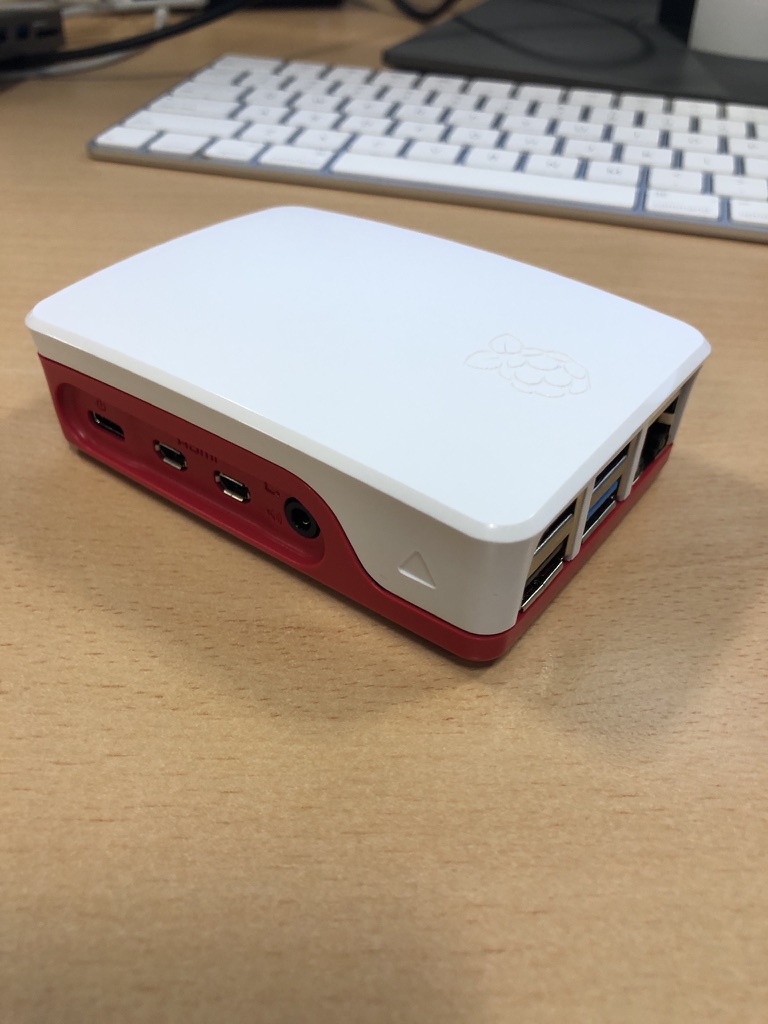
Right now, I’m using Resilio to replicate a full set of data from my Synology DiskStation to a Raspberry Pi 4. I also replicate a subset of this data—everything except the media center—to an SSD on my laptop. Soon, I plan to set up another Pi 4 as a backup for the same subset of data I have on my laptop.

At this point, I no longer keep any replica data at friends’ houses. I probably should, but when my last setup failed, my friend had to bring the device back to me when he visited from the States. Ultimately, it wasn’t worth buying new gear just to ship it back to him. Instead, I signed up for Amazon Glacier Deep Archive (or whatever they’re calling it now). It’s a cheap, long-term storage option where data is locked in for six months without modification or deletion options. My Synology DiskStation has a built-in client that made it easy to set up a backup of my personal data to Glacier. I still need to test a restore, but for now, I see Glacier as my remote storage solution. At about $1 per terabyte per month, nothing else comes close to that price. Setting up another Pi with a friend would cost around $150–$200, which makes Glacier far more cost-effective over a three-year period.

Because I’m still a bit unsure about restoring from Glacier, I’ve also started using Proton Drive for critical data, including my entire family photo and video library. Once I’ve uploaded the photos, that dataset stays pretty static, so Proton Drive makes sense. With our 3TB plan, I can gradually copy large, mostly unchanging files that I want securely backed up. Since there’s no automated way to sync this, it’s not my primary backup, but it adds another layer of protection.

Recently, with T in high school (or middle school if we were in the States), she’s been using the computer more often. It made sense to subscribe to the family plan of Office 365, which gives each of us 1TB of storage on OneDrive. I’m experimenting with Cryptomator encryption to securely store a subset of our backups on OneDrive. I still need to fully implement this, but it’s something I plan to sort out soon.

In addition to these replica copies, I take monthly RSYNC snapshots to a separate directory on my DiskStation. I have two scripts—one for odd months and one for even months—so I always have two recent copies. I also keep an annual copy of everything. It’s a bit less automated, but it works.

I’m also considering setting up another Pi as a remote Resilio node. Another option is to get a storage VPS again. The previous deal I had expired, so I canceled it last year. That’s partly why I’ve been relying less on remote Resilio replicas. When I got rid of my last remote Pi, I switched to a VPS running Resilio. Now, I’m debating whether it’s worth setting up another VPS instead of piecing together backups the way I have been. At around $80 per year for 2TB, it’s an option I’m keeping open.

Overall, the system works. When I had a catastrophic failure on my DiskStation before upgrading to my current one, I was able to verify that all my data was backed up somewhere. In the end, I didn’t need to restore because I managed to salvage the array on the DiskStation, but it was a valuable exercise to go through.

UPDATE: I wrote this before Christmas. Since then I have built a new Pi with a 2TB SSD and need to deploy it somewhere other than our house as a backup. I have also found a new cheap(ish) VPS storage provider. I have a 2TB VPS in Germany were I am now replicating my main Reslio shares to. I have stopped using Glacial since i haven’t been able to properly test it.  It is still by far the cheapest backup option out there however without being able to verify it works to easily fully recover i was a bit concerned.  The new VPS i have is a few pounds more per month but not outrageously expensive.

Pi Net is Live

At 19:28 Local time today My Pi Net node Epsilon came online at my friends house and started syncing with the rest of the network.  This is the first remote node in my private cloud network. This note was built using a raspberry pi 2 and a 1 TB USB hard drive that I had lying around. For my data replication I am using BitTorrent Sync 2.x. In order to get the Pi working I had to learn a bit of Linux. This is the first major milestone in my project to ensure my personal data is backed up offsite from my apartment using a secured private cloud and not leveraging any potentially insecure public clouds.

Next up in building out this network will be a second off-site location. I need to finish setting up second Pi and have that node live to have the network be complete.

My Personal Private vs Public Cloud Debate

I have been pondering my 321 Backup strategy for several months now.  Even before I had a near catastrophic issue with my Sinology DiskStation back in April I knew I wanted a more robust data management plan for my personal files.  I had been using the Sinology Cloud Station software but in my original configuration I was limited since all my data centered around my apartment.  This is convenient but not the safest approach.  I also only really had 2 copies of most of my data.  A really rock solid strategy has 3 copies across 2 sites, and if possible different media types.  I knew i wasn’t doing things good enough.

One solution I toyed around with was BitTorrent Sync.  Back in March I tried it out and had big problems with the UI on my desktop and the web interface on my DiskStation not loading regularly.  I didn’t feel the solution was ready for me to use yet.  I wasn’t confident in the Cloud Station software anymore since I ran into a data integrity issue with it in March.  I had uploaded photos I took in march and noticed that they hadn’t gotten to my Diskstation when they were saying they were syncing off my Desktop.  To make things more confusing the files were syncing to my laptop but not the Diskstation.

That problem lead me to the BitTorrent Sync option and the decision to upgrade to a beta version of the Synology software.  That in turn lead me to some problems I had an my near fatal event with the Diskstation.  So basically in a mission to solve my backup strategy problem i caused an event that a better backup strategy would have solved.

My near loss of all my data on the DiskStation was my wake up call that I needed to really figure some working solution out.  After I recovered (barely) from that incident I focused large amounts of time on solving data strategy.

After my trust was shaken with the Cloud Station data integrity problems I experienced I began to look at public cloud solutions.  I am very concerned about security so I discounted many public cloud providers.  Dropbox, and pretty much any American based solution is just not trustworthy with todays laws.  Dropbox employee’s can even get into your files if they need to regardless of the safeguards they claim to have I do not want anyone being able to get into my stuff unless I let them in.  That security concern lead me to MEGA.  They weren’t US based and they don’t have a way into your data.  Their plans were more expensive than most cloud providers however their 2TB plan more than covered my needs.

One downside was that MEGA didn’t have any built in backup solution for the Diskstation.  That meant I could backup my data to the cloud but the Diskstation wouldn’t be my main data source.  I could still use it as a home server but not the home of my data.  I wasn’t really pleased about that however I couldn’t really find an alternative that worked.  So earlier this spring I jumped into using MEGA as my cloud sync / backup solution.  It had a lot of what i wanted but it wasn’t perfect. It was the best of what was available that worked for me.

I spend a few weeks seeding and confirming my data was correct in MEGA before trying to make a sync copy onto my Laptop.  That was when I ran into issues.  What i noticed was after a while syncing files I would get to a point were the MEGA agent would freeze.  Sometimes after only 70-100 files downloaded.  I would restart the agent and it would do the same thing and copy a few more files and then stop.  I couldn’t really figure it out.  I tried reinstalling, putting the agent on another machine, checking their online help but i was unsuccessful at finding a solution.  This was an issue on top of a general annoyance I had were it would take 5-10 minutes for my admin page on the MEGA site to load.  I don’t know what it was doing but in any browser (chrome, firefox, or safari) i would have the same issue.  that wasn’t a show stopper however add to it that i can’t download a replica of my data onto my laptop I was very concerned.

After a week of tinkering I gave up and had no choice but to revert my decision and go back to Cloud Station software by Synology.  I didn’t want to bother calling MEGA.  I had a confidence issue and even if they could fix the issue in 10 minutes with my level of technical knowledge and online tools i should be able to figure it out.  If i can’t i have concerns about their service.  It wasnt like my problem was complex.  The system just stopped syncing data after a few files.

I wasn’t pleased however MEGA was never the perfect solution for me.  I knew that going into it but thought i could make it work.  In the end I couldn’t so I went back to Diskstation as my primary data store and used Cloud Station to sync.  I kept an eye on the data i synced to make sure i didnt have a repeat issue.  My plan to build another DiskStation and leave it with a friend was back on the table.  That was until about a week ago.

I don’t know what got me to look at BitTorrent Sync again however I installed it again.  I knew they were actively releasing newer versions so I had hoped that what happened the last time was an issue that was solved after a few months.  I was pleasantly surprised to see after some brief testing that the UI display issues appeared to be solved.  I slowly over a few days turned off syncing via Cloud Station and enabled BitTorrent Sync.  I made backups before my changes just in case.  The UI consistently worked on the desktop.  For the web interface on the DiskStation what i learned was first safari wasn’t so great for it.  Second that clearing my cookies for the site typically solved the issue.  With that issue resolved I moved most of my shares over to the BitTorrent Sync app within a week.  I was originally going to try out the system for 30 days and then decide if i wanted to pay for the Pro version.  After going over the 10 share limit for the trial i opted to pay for the 1 year Pro for $39.

As of right now I have my desktop, DiskStation NAS and laptop all replicating data with the new Sync software.  I am at a steady state like were i was back in March.  This steady state took a lot of research and trial and error however now is the harder part.  Now I need to finish this project and meet my objective of a true private cloud with data located in multiple locations.

Using BitTorrent Sync gives me a few options I didn’t have with the Synology centric Cloud Station.  My remote backup locations do not need to have a DiskStation.  I have two old Mac Mini’s that I could provision with external hard drives and drop them in remote locations.  That was my original idea at least. Now I am thinking bolder and cheaper.  If I am successful I will have a prototype to talk about soon.

Raspberry Pi Cloud Node Prototype

The first phase of my BitTorrent Sync project is mainly complete.  I now have the Sync software running on my Diskstation, Mac Mini desktop and my Macbook Pro laptop.  I have replaced my Sinology Cloud Station app and all files are kept up to date using BitTorrent Sync.  That change gets me to a point were I was before with Cloud Station.  I have access to all my files everywhere however I do not have a complete backup solution since most of the data is only current in two places.  Those places are 15 feet from each other and not really giving me much disaster recovery.

The next phase of my backup / cloud strategy is to have offsite copies of my data or large parts of my data in case of anything happening at home.  I originally planned to do this with a 2nd Sinology Diskstation somewhere.  The costs were very high and that solution limited me to one other location.  When I was thinking of using Cloud Station software from Sinology that solution made sense, however now that I got BitTorrent Sync to work I have other options.
Raspberry Pi & Drive

is bit torrent sync my answer to sync situation

My Evolving Use of Cloud Storage

Last year I canceled my pay Drobo subscription. I still have the service but with a lot less storage. At the time I wanted to build my own “cloud” storage system.  In reality I wanted to take my data at home and make it syncable via the internet like a cloud storage provider to my devices were ever i was.  Originally I bought a Transporter that I had hopes would take a 1TB drive and let me sync data to my computers.  That dream lasted about a week.  Their sync software was problimatic for me.  Instead I opted for a Synology NAS DS412+.  The added app’s functionality and redundant storage allowed me to move all my data to the Synology and no longer rely on my aging Drobo(s) as my primary storage system.  The Synology also allowed me to move some multimedia functions i did on my mac mini off to the NAS.  So far I have been very happy.  The Synology Cloud Sync app gives me Dropbox like functionality with my personal stuff.  The other file access options the Synology offers gives me access to all my data.  To do that with any other provider would be prohibitivly expensive because of the amount of data stored on the NAS.

The timeing for this change to self hosting my data was perfect.  I couldn’t realistically do what I am doing now earlier because when I had Time Warner my upload speeds were horrible (1.5mb).  After I moved to Fios my upload speeds jumped to between 25-35mb.  I have no problems using the Synology.

The problem with the Synology is that as much as the NAS itself is designed to last and has some drive resiliance in it, I do not have an offsite backup.  I used to copy my data manually for a while but now a days that is not a good idea.  it is also not feasable with the amount of data i have now.

After leaving Dropbox I read more and more about the potential issues with public cloud providers.  Such as Dropbox knows what you upload and wont keep a duplicate copy of a file of music if others have it.  That means they can (and i believe they have) removed content if there is a DMCA request.  I am also increasingly uneasy about US based hosting providers and the easy the government can get access to data.  I am not a criminal and don’t really have anything to hide in what I am storing however those are not reasons why I should be ok with the ease of government access to my data.  I will talk about that more in another post.  In relation to cloud storage I am glad I do not use Dropbox, however I put myself in the same situation with another provider.

Because I have so much data and I need to really be thinking about a 321 backup sceme I started using Crashplan and Amazon Glacial.  Crashplan I recently canceled because I was having problems with my copy of data on my Drobo that i would sync to Crashplan.  The crashplan app kept thinking that the drobo was disconnected and would keep creating new copies of my data.  When it takes weeks to sync a backup using crashplan having a new copy get created every so often is not good.  With that issue and the fact that the Crashplan Synology app caused my Synology to perform super slow to the point that I uninstalled it I gave up on Crashplan and canceled it.

Amazon Glacial has been good so far.  The challanges with Glacial is that the cost per month varries by how much i use it.  It is also much more expensive than Crashplan for the amount of data i have.  Another challange is getting data out is expensive in the event of a major issue.  Thankfully i havent had to worry about that yet but it is a concern.  The most current concern I have is that Amazon is a US based company and my data is hosted on US servers.  For now I am living with that risk.  My rational side says I dont do anything to warrent the government to want my data however I would rather that not even be an option.

One alternative to Dropbox I have been looking at is Mega.NZ.  They don’t have any access to my data once it is uploaded.  They offer 50gig free.  It is good to replace dropbox for some files i have and to give my most important stuff an offsite backup but it is not enough to backup my music, videos, and photos.  Their 1tb option is doable for me but even that isn’t enough to backup everything.  For now I will continue with Glacial as my backup.  I am investigating working with a friend or two to replica sync our Synologies between each other.  The cost of that may not be worth it but it is an interesting idea.