Switching to Claude

I’ve been on this AI journey for a while now, and for most of it ChatGPT was my main tool. But in February 2026 that changed.

Someone whose opinion I trust recommended I give Claude a try after voicing my frustrations with ChatGPT. When I actually sat down to evaluate it I did something that in hindsight was pretty funny. I asked Claude directly why I should use Claude over ChatGPT.

It told me not to.

Based on what I told Claude I wanted, it said I’d probably get better results from ChatGPT. So naturally I didn’t trust that answer and kept pushing. As I interrogated it further it started explaining that it was slower and more thoughtful, and from its previous read of what I was looking for, it figured I wanted fast straight answers. And that’s when something clicked for me.

One of my biggest frustrations with ChatGPT was exactly that. I’d ask it something and it would just fire back an answer. Fast, confident, and often not what I actually asked for. Like if I asked for specific instructions on how to do something on an Apple product, it would give me generic steps that didn’t even exist in the actual interface. I’d have to stop it and say don’t give me fluff, give me the actual thing. Then it would have to go look it up and either admit it didn’t know or finally give me something useful.

What Claude was describing as a weakness, slower and more considered, was exactly what I wanted. So I signed up and started using both in parallel.

Early on I was genuinely impressed with what was coming out of Claude. I was using Sonnet, the middle tier model, and the difference in output quality was noticeable pretty quickly. The concern then was whether I’d end up paying for two services. I was already paying for Venice and Lumo on the privacy side and the last thing I wanted was more sprawl.

But it became clear fairly fast that Claude was where I wanted to be. Which meant I had to migrate everything I’d built in ChatGPT over the previous six months or so. Custom GPTs, saved prompts, all of it. I had to extract everything, make sure I had backups, build a little text based database of all my prompts, and systematically move it all across.

I got it done within a month and managed to avoid paying for both services at the same time for more than one month. Then I downgraded ChatGPT to the free tier and haven’t looked back.

From a reliability standpoint Claude is better. Not perfect, and everything I said in the last post about not trusting it still applies. But it’s a meaningful improvement. And honestly, switching to it unlocked a whole new level of what I started doing with AI. Which is what the next post is about.

The Sunday Job My Dad Casually Had

Today would’ve been my dad‘s 81st birthday and since I had written this already I felt like he was inappropriate day to post it. I miss you Dad..

In another post I talked about my dad’s work schedule when I was growing up, and I mentioned how he used to pick up an extra shift at Rikers Island on Wednesdays to earn some additional money. That was one of his side gigs. But he had another one that was even more unexpected, and this one happened in the early nineteen nineties.

To set the stage, my dad was a trained physician assistant. A physician assistant is not a doctor, but at least in New York State at the time, you went through two years of medical training and then did about ninety five percent of what a doctor could do under the supervision of a physician. Or at least that is how my dad always described it, and it sounded close enough to the truth that I never questioned it.

He worked in trauma, and he was calm under pressure, steady handed, and very good with anything involving scalpels, needles, or anything sharp.

Which brings me to his second side hustle: piercing.

And not ear piercing. He specifically described it as “below the neck” piercing. That is all we are going to say here.

This was the early nineties. Piercing culture existed, but it was nowhere near as common or mainstream as it is today. My dad somehow got connected with a jewelry shop in the Village in New York City. It catered to a particular clientele who wanted this service, and the fact that he was medically trained, used sterile equipment, and could offer local anesthesia made him the right person for the job.

He only worked by appointment and only on Sundays. He would drive into the city, he never took public transportation (except once for me that may be another story), and set up in the back of the shop. He had the same portable television he used to bring to Rikers. This was before phones, before streaming, before anything digital, so that little TV was his entertainment. If it was winter, it was football. He would do a piercing, then sit back and watch the game, then another appointment, then more football. A very strange rhythm to imagine now, but that was his Sunday routine.

He told me once that almost no one ever used the anesthesia. He always offered it, had it ready, and every time the person said no. Apparently people just wanted to get in, get it done, and get out.

I remember once, when some college friends were visiting, we stumbled across his instructional video. Not his own tape, but the training material he was given when he started. Let us just say it covered a very broad range of below the neck locations. We did not watch the whole thing. We did not want to. But it definitely confirmed that my dad’s side gig was… let us call it unique.

He did that job for years, purely for extra money. It helped when my sister was in college and then when we both were. When he no longer needed the income, he stopped. He never seemed emotionally attached to the job. It was work. It paid well. It did what it needed to do.

Today, piercing is everywhere. You can walk into a studio in almost any city and find people who specialize in it. Back in the early nineties, though, it was niche, edgy, and far less common. Which means, in a very unexpected way, my dad was absolutely ahead of the trend.

At least in that particular area.

Use AI Like It’s Lying To You, Because It Is

I’ve touched on this in passing across a few posts now, but it deserves its own space. Because as useful as AI has been for me, it is not sunshine and rainbows.

AI is a great tool. I genuinely believe that. But I also think the future gets pretty dystopian if people don’t use these tools with their eyes open. And right now, a lot of people aren’t.

One thing I read recently that stuck with me: it can do super advanced calculations but it can’t tell time right. That sounds like a joke but it isn’t. Some of the things I’ve asked it, it will be absolutely insistent it’s correct. You interrogate it because something smells off, and eventually it folds. Oh yeah, you’re right, I was wrong. I’ve had situations where I knew it was wrong, kept pushing, and it took a surprisingly long time before it admitted it.

So what I tell people, my kids, colleagues at work, is this. Use it. But do not trust it. Assume it’s going to lie to you. If you go in with that mindset and you scrutinise the output, it can be really good. But you have to be able to scrutinise it. That’s the part people skip.

That’s also the part that makes it genuinely dangerous in the wrong hands. I can ask it something about cybersecurity and I’ll know pretty quickly if the answer looks right or completely off. But I can’t ask it to do my taxes. I don’t know tax law. So if it tells me I can do something, I have no idea if it’s true. That’s a problem. And it’s why you see things like lawyers submitting court filings with citations that don’t exist because a judge caught them using AI and not checking the output. People just throw stuff in and take whatever comes out.

I ran into this myself about a year or so ago when I was doing some budget planning. Nothing super sensitive, just the savings pots I set aside for predictable expenses throughout the year so I’m not hit with an inconsistent spend later. I do it all in a spreadsheet and it gets involved. I figured let me see if AI can handle it.

It did it, and then it didn’t. The numbers were inconsistent. Flat out wrong in places. I tried for a few months and I just could not rely on it. So I stopped and went back to my spreadsheet.

More recently I tried again with a different model, and I’ll get into that in the next post. But it’s actually working now. Two months in and the output is consistently accurate. I’ve also gotten smarter about how I prompt it, asking it to show its work and export the data in a way I can verify. So it’s a combination of the models improving and me getting better at using them.

But the overall lesson hasn’t changed. The reading of the tea leaves is the hard part. Sometimes the output is exactly what you wanted and better than you could have done yourself. Sometimes it’s close but slightly off in a way that’s easy to miss. And sometimes it’s just wrong and completely confident about it.

The tool is getting better. That’s real. But so is the risk of people treating it like it’s infallible. It isn’t. Not even close.

Please Take My Money: Outback Steakhouse Edition

We were visiting my mom in April and one of the things on the agenda was Outback. I wanted my annual Bloomin’ Onion fix. One of my daughters wanted a a steak. My other daughter wanted anything cheese, Mac n cheese, grilled cheese, whatever.

But that’s not actually what I want to talk about.

This is a new entry in my ongoing Please Take My Money series, where I chronicle the seemingly rare occasions when a company makes it genuinely easy for me to give them money or when they make it really really difficult to do so. This time the subject is Outback Steakhouse.

Outback has tablets at the tables now. Let’s face it I have lived in London for over 8 years. Even though I have been back to Outback a few times since moving I do not recall when they put these things in. For all I know it’s been years. The are little battery powered things on stands. You can play games on them apparently, which I find mildly annoying. I don’t love screens at restaurants. But whatever, we ordered normally, the waiter came by, we talked, it was fine.

When dessert came around he kind of gestured at the tablet and said just order from there whenever you’re ready. So we did. Took our time, browsed, ordered. Completely seamless.

Then came the real test. Paying.

Paying at restaurants in the US is a whole production vs the UK or Europe. You get the bill. You give them your card. They disappear with your card. They come back. You add the tip. You sign. They take the bill and everything with it. You wait for the receipt. The charge your card again for the new total. The whole thing has like six or seven steps and your credit card is out of your possession for half of them, which from a security standpoint is not great. Europe figured this out a long time ago with chip and pin. You never hand your card to anyone.

So I was curious how the tablet checkout would go, half expecting to hit the usual wall. You know, they could make it easy. They sell you on how quick and easy it is and then you get there and it wants you to create an account. Enter your email. Set a password. Agree to marketing emails. All of that. None of it for your benefit.

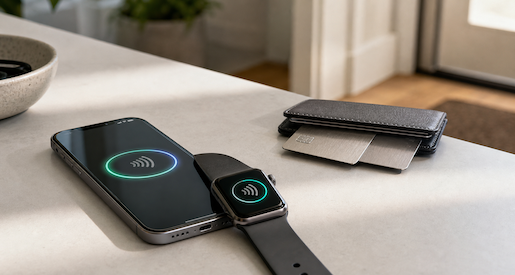
Thankfully Outback went with customer convenience over their data collection. The screen showed the bill, everything itemized. Tap to pay. I tapped. It asked if I wanted a receipt by email or text, or not at all. That was it. Done. I get they can get your email or phone number by getting the receipt. I prefer that since it doesn’t stop me from paying. I also have no problem giving an email with no account creation since I have disposable emails give out for situations like this.

This was genuinely one of the smoothest restaurant checkouts I’ve had in the States in years. So good on you, Outback. You make a solid steak and apparently you also understand that sometimes people just want to pay and leave.

On my please take my money scale Outback got top marks.

What I Actually Started Using AI For

I’ve been writing about my AI journey for a few posts now, and I’ve talked a lot about which tools I use and how much I trust them. But I haven’t really gotten into what I’m actually doing with them day to day. That’s what this one is about.

Trip planning was one of the first things that clicked. When you’re searching for flights and hotels, every website limits what details you can give it. With AI I could be hyper specific. If I’m flying with just the kids it’s this configuration. If my wife is with us it’s that one. These are the types of hotels we like, these are the amenities we need. It could actually hold all of that and work with it.

It didn’t book anything, but it helped me build out exactly what we were looking for and where to go look for it.

Then it evolved. I used to use Trello boards to track trips day by day, reservations, what we were doing when. Now I do all of that inside the AI itself. It exports as a YAML file I can save and reload if I need to start a fresh chat. Since privacy matters to me I’ll delete a chat when I’m done with it, but the file means I don’t lose anything. I have a general preferences file I keep updating, and then a separate file for each trip. It works really well.

I did something similar for days out with the kids. I took a week off last August and it was just me and the girls. I built out a history file of things we’d done and liked, threw in our preferences, and used it to plan the week. On Tuesday we have this, I need to figure out Wednesday, here’s a restaurant nearby that fits. I’d already been doing some of that in a neglected Trello board, but this way it was all queryable and easy to update.

Date nights with my wife got the same treatment. I’d go through our preferences, confirm them with her, and then present her with suggestions. I’ll be honest, I wasn’t exactly hiding where the ideas came from. More like, hey, I told the magic box what we like and this is what it came up with. Sometimes it was completely off. Sometimes it was genuinely spot on.

More recently it’s been helping with meal planning for the kids. Mine are picky eaters, so it was a lot of back and forth on what might actually work. It helped me land on a couple of new meals and then built a schedule to track them. Basic stuff on the surface, but genuinely useful in practice.

One that I found unexpectedly cool was using it to wrangle my Trello data. I have boards for things to watch and books to read. When I tried to pull that data into an AI the file was massive. So I had the AI help me write some scripts to strip out everything I didn’t need, took a two meg file down to about 50K, and then I could actually work with it.

Which brings me to audiobook recommendations. I was a little cautious about feeding it my reading history since it builds up a fairly personal picture of you. But I write about what I read anyway, so it felt like a reasonable trade. I’d give it what I read, when I read it, what I thought of it, and ask for recommendations.

Hit or miss, honestly. Some suggestions were weird and when I pushed back on them it would just fold immediately. That should always give you pause. But when it got it right it was actually pretty useful, and interrogating the reasoning often got me somewhere interesting even when the initial answer was off.

Which is a good lead in to something I want to dig into a bit more. It does some genuinely impressive things, but it’s far from perfect, and that part matters too.

The Case for a Private AI

So when I started paying for ChatGPT, I’d hesitate before putting anything into it. I had to make conscious decisions about what I was okay sharing and what I wasn’t. In some cases it was easy. I don’t care about this, so fine. In others it was something I did care about, but the convenience won out and I’d bend my own rules a bit.

Come May or June 2024, I read about Venice.AI. It was intriguing because I wanted a private AI, and what these guys had built was designed from the ground up around privacy. Nothing stored, no logs kept. Yes, there’s still that moment in time where they’re processing your data, but they’re keeping nothing after that. Their entire business model is built on trust.

Are they 100% trustworthy? No. The only way to truly guarantee that is to run your own model. But they were offering something real, so I was intrigued.

The reason I hadn’t gone the local model route already was my hardware. I had an M3 MacBook Air with 16 gigs of RAM. I could download LM Studio and run stuff, but it was slow and clunky. Just not the experience I was looking for. I looked into cloud-hosted GPU options too, the kind of thing a friend had mentioned, but it was a lot of configuration and effort I just didn’t want to deal with. Funny enough, nowadays I could probably have Claude Code help me set that up in an afternoon. But I’m getting ahead of myself.

So when Venice came out with a pro plan at $49 a year as their introductory offer, which has since tripled, though as of my last renewal I was still grandfathered in, I figured for that price it was worth trying. It’s definitely more rudimentary than ChatGPT, but the privacy confidence is real. I’m still careful about what I put in it, but I’m more willing to share certain things there than I am with the public models.

They’ve since launched different models with different privacy levels, which is worth knowing. Some are fully private, some are anonymised but not fully private. You have to pay attention to which is which.

Fast forward to summer 2025. Proton, who I’ve been writing about for over ten years now, and at this point calling them just my email provider doesn’t really cover it, they do storage, VPN, and a bunch of other stuff, launched Lumo, their own privacy-focused LLM. I gave it a try.

The free version was pretty limited, so I added their paid tier for a few months while waiting for my main Proton plan to renew in December. The jury’s still a bit out on it. It did some things okay. From a pure trust perspective I probably trust it more than Venice just because I’ve been a paying Proton customer for a decade. But the way Venice has architected things, it’s actually more private. Lumo is more convenient though, and private enough for most of what I need.

One of the trade-offs with Venice’s full privacy mode is that nothing persists. No data moves between devices or browsers when you log in. Lumo does sync, but you’re trusting that it’s still zero-knowledge on their end.

I’ve actually been using Lumo recently for some things that are genuinely private, things I wouldn’t put near a public model. My logic is simple. I’ve been paying Proton for years to store sensitive documents privately. So why not use that same platform’s LLM to process those same documents? I’m not going to get into specifics here for obvious reasons, but it’s been useful.

The broader point is that I don’t always trust the public models, and honestly you shouldn’t either. But over time I’ve become more relaxed about certain things. It’s a constant cost-benefit calculation. The privacy models are getting better, and even the public ones will sometimes tell you that for certain tasks you don’t need high-level reasoning anyway, so a privacy model is probably fine.

The hard part now is knowing which model to reach for. Which is a whole other post.

As with the first post in this series I used AI to generate my banner image. I am not saying it’s good. I am just saying what I did.

From Sceptic to Subscriber: Beginning of My AI Story

I can’t believe I’m only now really starting to talk about some AI stuff, and ChatGPT launched in November 2022.

Looking back, I really didn’t do very much with it for over a year. The first six months was kind of like, okay, that’s cool, fine. I did a lot of reading about it separately, but I really didn’t do a heck of a lot until February 2024.

So over a year later, things were mature enough that I decided to take the plunge and try one of the paid services. Through the summer of 2023 I was definitely doing things here and there, but I was sceptical on what it could do. I was sceptical on its privacy. Well, I’m still sceptical on its privacy. But I didn’t pay for anything, and I was what you’d consider a light, casual user.

February 2024, I upgraded to Copilot. I also upgraded the family to the Microsoft 365 family plan at the same time, which you kind of need for Copilot Pro, or don’t, I forget. But there was a reason I did both at the same time. I treated it like a trial. Paid for it, but gave myself 30 days to see if I’d actually use it.

And I liked it. But the main reason I’d gone with Copilot was for the Microsoft Office integrations. That’s what sold me on it for personal use. In practice though, they just didn’t meet expectations at the time. And once I started talking to friends about it, the logic became pretty clear. Copilot is powered by ChatGPT anyway, and ChatGPT at the time had more plugins and a lot more flexibility. So why was I paying for the middleman?

I only used Copilot for about a month before switching to ChatGPT in March 2024.

I started using that on and off. In the beginning I’m not sure I really got my money’s worth, but it was worthwhile to have something and actually use it. I was able to use it for things like tutoring the kids — there’s literally a way to set it up so it won’t just give them the answer, it walks them through the problem. Stuff like that. A whole bunch of different use cases.

But what became apparent straight away was that there were things I was very hesitant to do with it, because it was, and still is, unclear what they actually do with your data.

For context I ran this story through an AI image generator to get a banner for this entry and after 3 tries it came up with what I used.

Explaining Technology One Pop Culture Reference at a Time

I sometimes describe my job as “using pop culture references to explain technology to people, or security to people.” It started as a joke, but honestly, it’s not far off. I do that. A lot.

There’s something about a good movie quote or TV moment that just clicks when you’re trying to explain a technical concept. It makes it human, relatable, and a little less dry. So yeah, I lean into it.

But here’s the tricky part: I live in England now. I’ve been here almost eight years, and I’ve learned that some of my go-to cultural references don’t always travel well.

Every so often, I’ll start telling a story and then have to stop myself mid-sentence to ask, “Have you ever heard of…?” And depending on the answer, I either get to deliver a perfect analogy or end up staring into polite, confused faces.

Sometimes I strike gold, but other times there’s deafening silence. Office Space is hit or miss. The Simpsons are more universal, but even that’s patchy. And there’s that moment where I think, never mind, not worth the detour.

It works both ways too. My British colleagues drop references that go straight over my head. My response is to politely tell them I have no clue what they’re talking about. We usually get a laugh out of that.

Still, every so often, the worlds overlap beautifully. For example, I once used a Highlander reference, “There can be only one,” in a meeting. It landed with absolutely no one. Then, a week later, one of my coworkers heard someone else use it (a Brit, no less), watched the movie, and loved it. More recently, my boss used the same line in another meeting. I always knew it was a thing.

Maybe that’s the fun of it, figuring out which cultural shorthand actually connects across different backgrounds. Some hit, some miss, but when they do work, it’s this small, shared spark of understanding. And honestly, that’s kind of the whole point.

Photo is the hallway set from the Big Bang Theory. My sister, mom and I were on the backlot for my mom’s birthday last year and I got some really good photos. Appropriate since I use that show as references, although it would have been better if there was a set from How I Met Your Mother since I quote that show much more!

The Great Hotel TV Failure

hotel tv media centre

This is an older story from April 2024. We were visiting M’s parents and staying at an Aloft Marriott. Pretty good hotel, actually. Kids didn’t like the breakfast, I did. There was a pool. Close to the in-laws. Great value overall.

There were a couple days where M had the car and it was just me and the girls at the hotel. We decided we’d watch a movie, which kicked off the classic “how do we get the thing on my device onto the TV” problem.

I’ve debated traveling with an HDMI cable. It works. It’s just annoying to bring, and I never feel like packing it. So when I noticed the TV actually had an AirPlay option in the menu, the tech part of my brain started geeking out. This felt like one of those rare moments where hotel tech was finally catching up with reality.

At least in theory.

In practice, it refused to work. At all. I tried everything. And as someone who works in tech, there’s always that moment of “I cannot be defeated by a hotel TV,” but eventually you either give up or swallow your pride. I called their support guy. He came upstairs. He didn’t even know the feature existed until I showed him the menu for it. Still no luck. Completely dead.

So now it’s me, two kids, and no movie.

My workaround? I ended up ordering a Chromecast through DoorDash. Someone literally drove to a store, picked it up, and brought it to the hotel. Kind of wild. I don’t even know if that’s a thing in the UK. If it is, I’ve never tried it.

The Chromecast itself was tiny and cheap and came with its own little HDMI tail. Plugged it in, powered it up, connected it to my phone, and that was that. The hardest part was waiting for the movie to download on the hotel Wi-Fi. After that, everything just worked.

We watched Ghostbusters: Afterlife. The kids loved it so much we ended up seeing the sequel in the theater later.

The bigger point here is that the fancy casting feature Marriott advertised was a complete fail. Maybe they’ve fixed it since. I hope so because letting people cast from their own devices is safer and easier for everyone. I’m definitely not signing into a hotel TV with my Netflix credentials. No thanks.

I still have that little Chromecast. I don’t use many Google devices anymore, but this one is so small and so useful that I keep it around. Do I actually remember to travel with it? No. Should I? Probably. But whatever.

Planes, Trains, and Getting There Anyway

After I got the word that my brother in law had passed away, I immediately booked plane tickets. We found a flight out of Heathrow at 12:50 p.m., planned a normal morning, and headed to the airport.

It was not until we were already on the Elizabeth line, almost there, that I noticed the alert. Our flight had been delayed by seven and a half hours.

We needed to get to New Jersey that day. The funeral was the following day, and missing it was not really an option. Any flight leaving London the next day would get us there too late. So once we arrived at the airport, we went straight to the airline’s Special Help counter to see what could be done.

They were able to get us confirmed seats on the 6 p.m. flight. Technically, that was an improvement. It was about an hour and a half earlier than our newly delayed flight. But it was still very late. It would get us into New Jersey that day, but very close to midnight local time.

The only other option they offered was standby on the noon flight, which was actually earlier than our original departure. We went through the security routine, grabbed some breakfast quickly, and then went to the gate when they called it for the noon flight.

When boarding finished, there was exactly one seat available.

My wife and I talked it through quickly, and I got on the plane. She stayed behind with the kids and planned to try to fly standby on the 3 p.m. flight, and if that did not work, take the 6 p.m. flight we already had confirmed.

The idea was that I would meet my mom, get a car, and head either to my sister’s place or the hotel.

That part did not work out.

I landed without issue and got an Uber to the hotel. My mom’s flight was cancelled entirely. She was rebooked to JFK, while I had flown into Newark. From there, she took the AirTrain, the Long Island Railroad, and New Jersey Transit, and went straight to my sister’s.

My wife was not able to get on standby for the earlier flight and ended up on the 6 p.m. flight after all. She managed to rearrange the rental car and arrived at the hotel close to midnight New York time.

So in the end, we all got there. Just not together. And not in the way we expected.

To be fair to the airline, there had been a major blizzard the day before. By the time we landed, things were slowly getting back to normal. Still, the whole experience felt like planes, trains, and automobiles in real time.

Hectic, exhausting, and strangely memorable, for all the wrong reasons.

Minor note. I wasn’t sure when I was going to post this one. Since it involves travel and today the girls and I are flying home from our term break holiday I thought it was appropriate to post it. If all goes to plan we should be boarding the plane home a few hours after this posts.