I keep a blog idea board in my Trello app so I can track all the things I want to write about, because I’ll come up with an idea for a post and then promptly forget it. Of course, sometimes I also add it to the board and still forget about it for years. By the time I rediscover it, the topic isn’t relevant anymore, or I’ve already written something similar. But I digress.
One of those old notes was about the state of my Pi network. I wrote it down a year ago, maybe updated it earlier this year, and now I’ve finally made enough changes that it’s worth revisiting.
I’ve owned pretty much every generation of Raspberry Pi. Actually, I think I’ve owned all the main variants from each generation, not the tiny ones or the 400/500 models that are built into keyboards, but all the standard boards. I bought the original Raspberry Pi 1, set it up, played with it, and then never really deployed it for anything meaningful. By the time I wanted to, the Pi 2 had already come out, so I bought one of those. At some point I got rid of the Pi 1, maybe gave it away, but I’ve kept just about every other one since.
The backbone of my original home network was built on Raspberry Pi 2s. I had five of them running my early private cloud backup network. Over time, I upgraded them with new cases, official Wi-Fi adapters, and less reliance on Ethernet. Then the Pi 3s came out, and I added a few of those for compute jobs. Then came the Pi 4s, and I gradually shifted everything over again.
Eventually, I stopped using the 2s and most of the 3s, and my little network of Pis became mostly 4s. I think I had around four or five of them running various workloads. When the Pi 5s came out, I didn’t jump immediately, but I have about four of them now.
Funny thing is, I’m using less compute now than ever. The main purpose of the Pi cluster used to be my Docker setup, which ran parts of my media center, a Minecraft server, and Homebridge for connecting Ring cameras to Apple HomeKit. Most of that has since moved or shut down.
I replaced the Ring cameras, so no need for Homebridge. Plex moved to my Synology DiskStation because the transcoding works better there. The Docker stack was easy enough to migrate, so that freed up another Pi.
These days, I’m really only using:
One Resilio Sync node for backups One BorgBackup setup for immutable backups One Pi as a Tailscale exit node And a Raspberry Pi 4 running Pi-hole for DHCP and DNS in the house
Everything else runs on Pi 5s, though even that’s more power than I need. When I built out the 5s earlier this year, I decided to stop using SD cards and external drives. I got cases with SSD add-ons, most with 256 GB drives, and one with a 2 TB SSD for backups. It’s a neat all-in-one box setup.
The Pi 4, especially the 8 GB version, is still a perfectly good piece of kit, but I just don’t have enough for it to do. So I’ve started selling them off on eBay. I’ve already sold a couple of the 4s and gotten a surprisingly good return for hardware that’s several years old. I’ve sold all of my 3s and am now selling the 2s. Apparently, people still buy them for nostalgia or small projects.
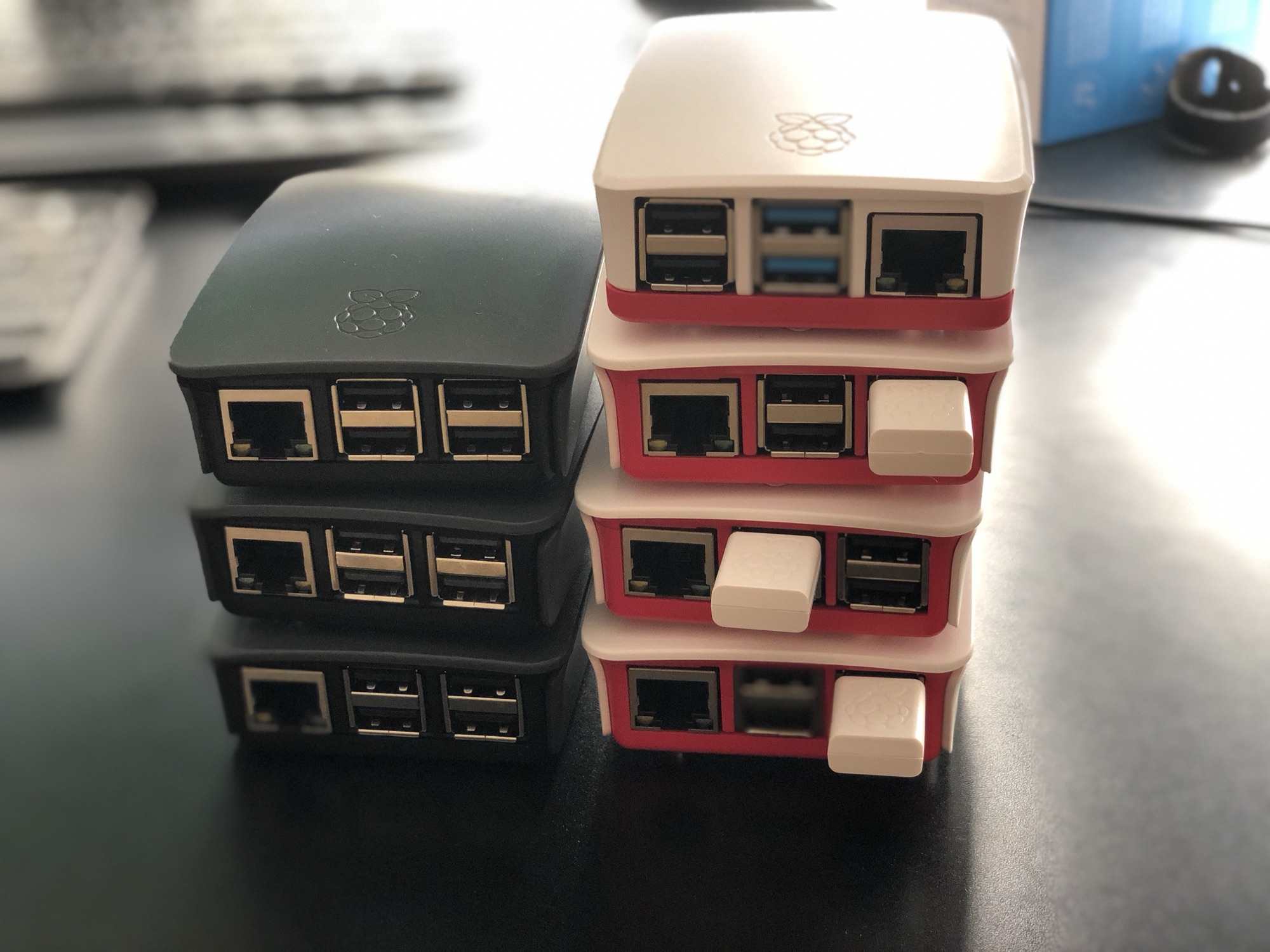
A few of my old ones are in official cases, and two are even in LEGO cases with camera kits. They look great, but I’m trying to pare everything down so I’m left with only the Pi 5s, and maybe I’ll move the Pi-hole over to a 5 while I’m at it.
Maintaining the hardware takes a decent amount of time and effort, and with what I’m doing now, renting a virtual private server is just simpler. My web hosting, where this blog lives, runs on a VPS with 2.5 GB of RAM, a single virtual core, and about 40 GB of storage, all for around $23 a year. It’s based in Dublin and does the job beautifully.
Building a Pi 5 setup can easily cost around four times that, even if it gives me more power than I’ll ever use. I’m not planning to get rid of the 5s I already have since they’re great machines, but I’ve reduced what I actually run on them. Justifying keeping all the older models sitting around isn’t really there anymore. For most of what I run these days, a VPS or my upgraded DiskStation handles it fine.
So yes, I’m officially downgrading, selling off hardware, consolidating services, and simplifying. I still love tinkering, but the Pi 5s are plenty. The rest? Off to eBay.