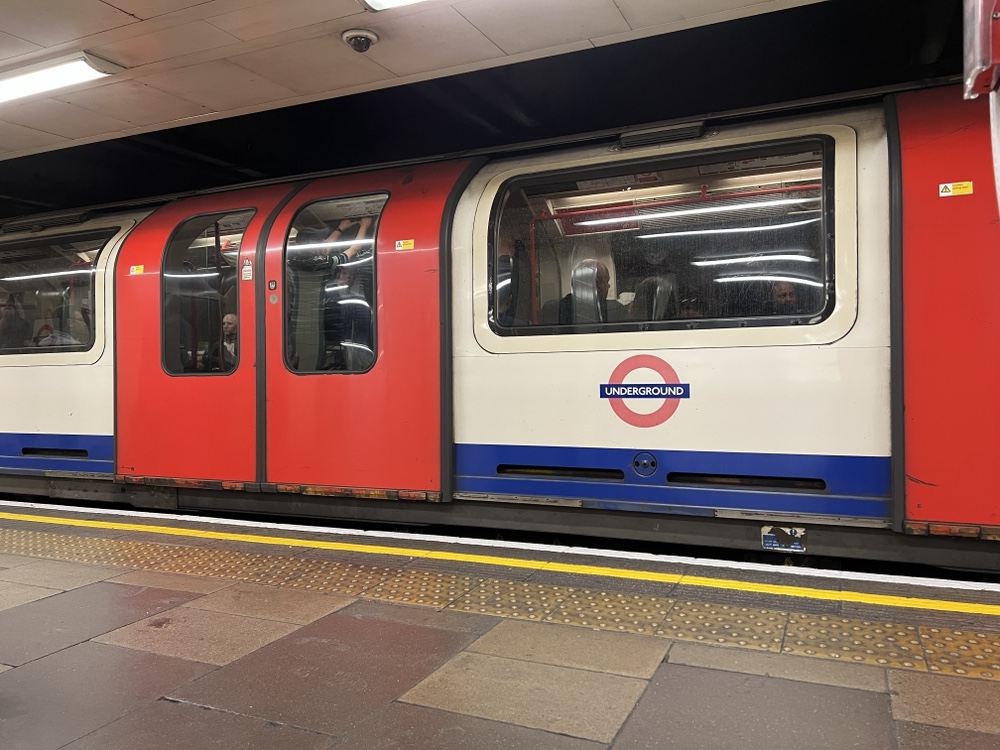
Central Line Time Travel to The Mid 90’s

London Underground

So instead of replacing all the Central line trains, they’re refurbishing them. There’s a whole drama behind that decision, but I’m not getting into it. Over the past year I think they’ve done, what, two of them? Maybe three? I’ve only ever seen photos. Until going to work two weeks ago.

I got on the train to head into the office and immediately noticed it felt… new. Not “new new,” but “refurbished new,” which is apparently a category now.

Quick recap of what they’re doing: they take the existing trains, strip them down to the frame, rebuild everything, fix the motors, and put it all back together. And in the end, you get something that basically looks like the same train you’ve seen for decades, just cleaner and shinier.

Here’s the weird part. I never rode these things when they were actually new. So in 2025, stepping onto a “brand new” Central line train is like stepping into a fresh-from-the-factory 1990s time capsule.

Some things were noticeably updated. The audio announcements sounded different, the seats supposedly got an upgrade, and the seat pattern definitely changed. But otherwise it was the same old train, just suspiciously clean, like someone hit reset on it.

Strange, but kind of fun for a random Tuesday morning.

W Sisters and Watching Space Chris

When the girls were really little—the still-talking-funny, wide-eyed-about-everything little—we kept screen time on a tight leash. No endless YouTube spirals, no algorithm babysitting. Just carefully chosen things that felt worth their attention.

One of those things turned out to be the astronauts aboard the International Space Station.

At first, I thought it would be a novelty, a quick peek at floating hair and zero-gravity toothpaste. But they loved it. They really loved it. Especially Commander Chris Hadfield, or as he became known in our house: Space Chris.

They’d watch him make a sandwich in microgravity or explain why you can’t cry in space. The girls giggled through every video, fascinated not just by the floating things but by the idea that people actually live up there.

Chris was such a natural communicator. He didn’t just talk science; he made space feel human. That kind of thing sticks with kids. It stuck with me too.

When his autobiography came out, I didn’t read it right away, but because of those videos, I wanted to. And when I finally did, I enjoyed it. Later I read two of his novels—the first one was pretty good, the second one not so much, but still worth the read.

Even now, when I come across something about him or the space station, I think back to those days when the W Sisters were small and completely captivated by Space Chris. Watching them watch him was just as much fun as the videos themselves.

I like to think those moments gave them something lasting—maybe not a love of space exactly, but at least a curiosity that lifts off now and then. And that’s enough for me.

Please Take My Money, GBK

I don’t know why this topic grabs my attention the way it does. Maybe it’s because I’ve been quietly fascinated by how we pay for things ever since contactless cards appeared. Or maybe it goes back even further to this tech show I watched years ago. It was probably the early 2000s, maybe even before that, and they were covering a guy in Singapore who tried to spend an entire day using only a watch that was linked to the local payment system. It was a test for the show, and he actually pulled it off. He managed to buy food, travel around, and live his normal routine without touching his wallet once. I thought that was the coolest thing.

So when tap to pay and mobile wallets finally arrived, I was ready. It felt like the future was catching up. But over time, I’ve learned that not all of these systems deserve to exist. Some work beautifully. Others are so clumsy they make you nostalgic for exact change.

I’ve written before about those “Please Take My Money” moments, the times when businesses make it weirdly difficult for customers to give them money. This is in that same spirit, just focused on the modern point of sale experience, or really the broader world of how we’re expected to pay for things now. Some places get it right. Others seem to treat usability like a design flaw.

And that’s how we arrive at GBK, Gourmet Burger Kitchen, which manages to turn something simple into a mild endurance test.

GBK: The Anti Convenience Experience

GBK lets you order at the counter or through their app. In theory, that’s flexible. In practice, it’s annoying. When I’m sitting at a table, I don’t want to get up and stand in line like I’m at McDonald’s. GBK isn’t supposed to be that kind of place.

We’ve been to the Stratford location several times, and every time it’s the same story. Between my wife’s Three network, my EE connection, and even my work phone on a different provider, none of us can get a decent signal inside. So you try their free Wi Fi, which of course wants a bunch of personal details before letting you in. It’s not free. It’s just data collection in disguise.

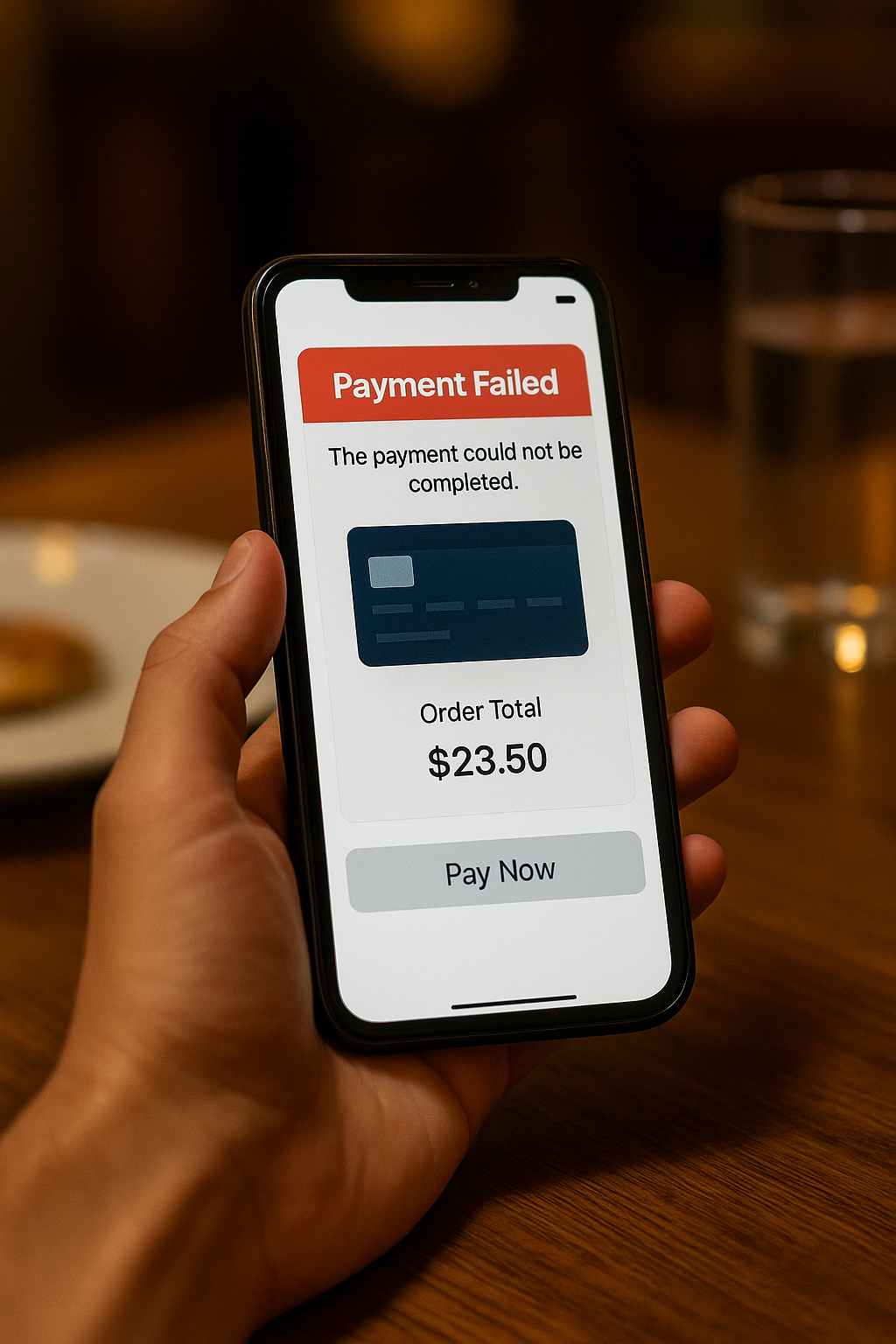
Once you’re connected, the app insists that you register. You can’t just use Apple Pay or Google Pay. You have to create an account, fill in your billing details, and basically hand over your life story before you can order a burger. The irony is that the whole point of tap to pay systems was to skip that kind of nonsense. But GBK wants your information, not your convenience.

After fighting with the app a few times, we gave up and just started ordering at the counter again. The food’s fine, good even, but the ordering system makes the experience harder than it needs to be. It’s like they built a digital wall between customers and the register.

The Bigger Problem

This isn’t just about GBK. It’s about how so many modern payment systems have completely missed the point. They were supposed to make life easier, but in too many cases, they’ve turned into data traps or loyalty funnels. The best systems disappear into the background. You pay, and that’s it. No account, no registration, no email sign up, no exclusive offers. Just pay and eat.

GBK gets a fail from me. I’ll keep writing about more of these experiences because some places do get it right, and others, well, not even close.

So yes, GBK, please take my money. Just stop making me work so hard for it.
The Sanctity of the Bar Round

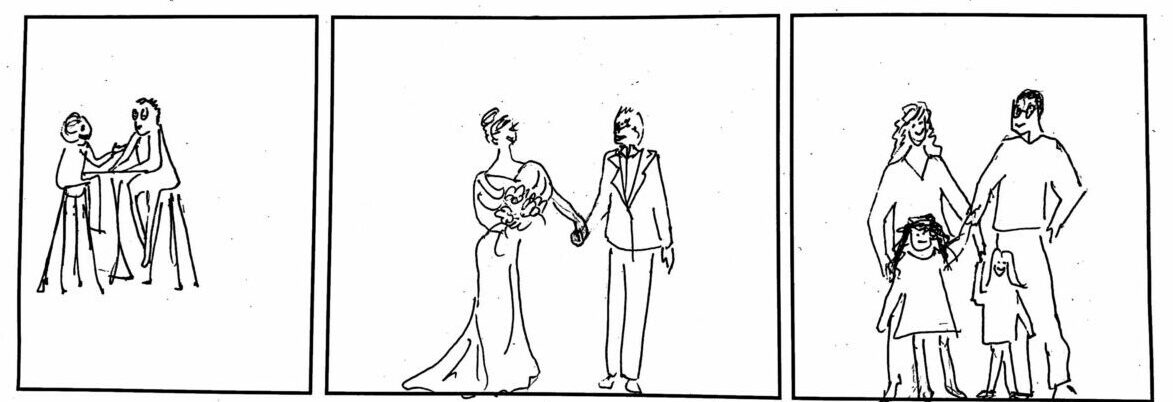
I know people who go to work and when it’s time to leave, they go home. They have a work life and a personal life, and they keep the two completely separate. I spend so much time at work that I’ve never understood how people do that. In New York, there was always a core group willing to go out at least once a week after work. It was nice to get away from the office and either talk about work or not talk about work at all. In retrospect, when I didn’t have that kind of social outlet, it usually coincided with my least happy times at work.

When I moved to London, I hoped to find something similar since I already knew a few people locally. At first, though, I discovered that no one really did that here. It bummed me out a bit until I realized one of my colleagues was also eager to start a tradition. So we did.

Before the lockdown, I spent my first couple of years in London going out with friends after work, and inevitably I noticed a few cultural differences between London and New York that fascinated me. The first thing I learned was the phrase “eating is cheating.” Apparently, that means you go to the pub to drink, not to eat. In New York, there was always at least one person who would order appetizers or finger food. They were delicious and had the bonus of softening the alcohol’s effects. In London, that’s almost never the case. Eating is, indeed, cheating.

The other difference is how rounds work. In London, the first round of drinks is usually small, because people trickle in at different times. In New York, the first round is massive. Everyone shows up right after work, and the early crowd is the biggest. Two or three rounds later, the group thins out dramatically. In London, it’s much more fluid.

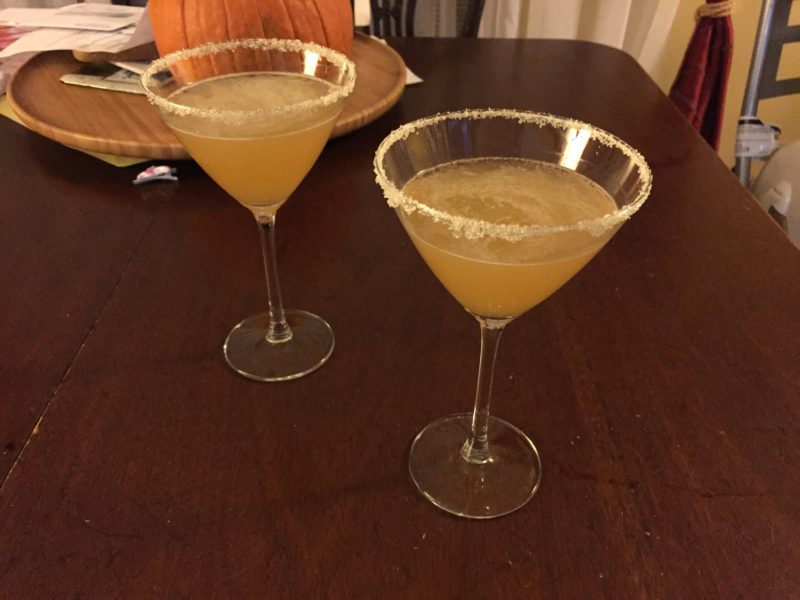
One of the things that really stuck with me about London pub life is what I’ve come to call the “sanctity of the bar round.” One evening, we were at an outdoor pub near the office. It was someone else’s turn to get the round. My usual drink is a Jack Daniels and Diet Coke—it’s reliably available almost anywhere. This pub, however, didn’t have Jack Daniels. My friend came back with drinks for everyone else and told me they didn’t have my usual. He said they had a generic bourbon if I wanted that instead. I said fine and started to walk toward the bar to get it myself. My friend physically stopped me, put down his drink, and went back inside to get it for me. Everyone else at the table agreed that it was absolutely his responsibility. Apparently, once you take a round, you’re in it until everyone has their drink in hand.

That wasn’t the only time it happened either. I brought it up with other friends later, and everyone agreed on the same thing. The sanctity of the bar round is real and you never disrupt it.